Spotlight on LLMEs – Specialist Knowledge for Teaching Mathematics Programme: Early Career Teachers
Linda Lavagna-Slater shares her experience leading this PD programme, designed to support teachers in the first two years of their teaching careers.
26/01/2026
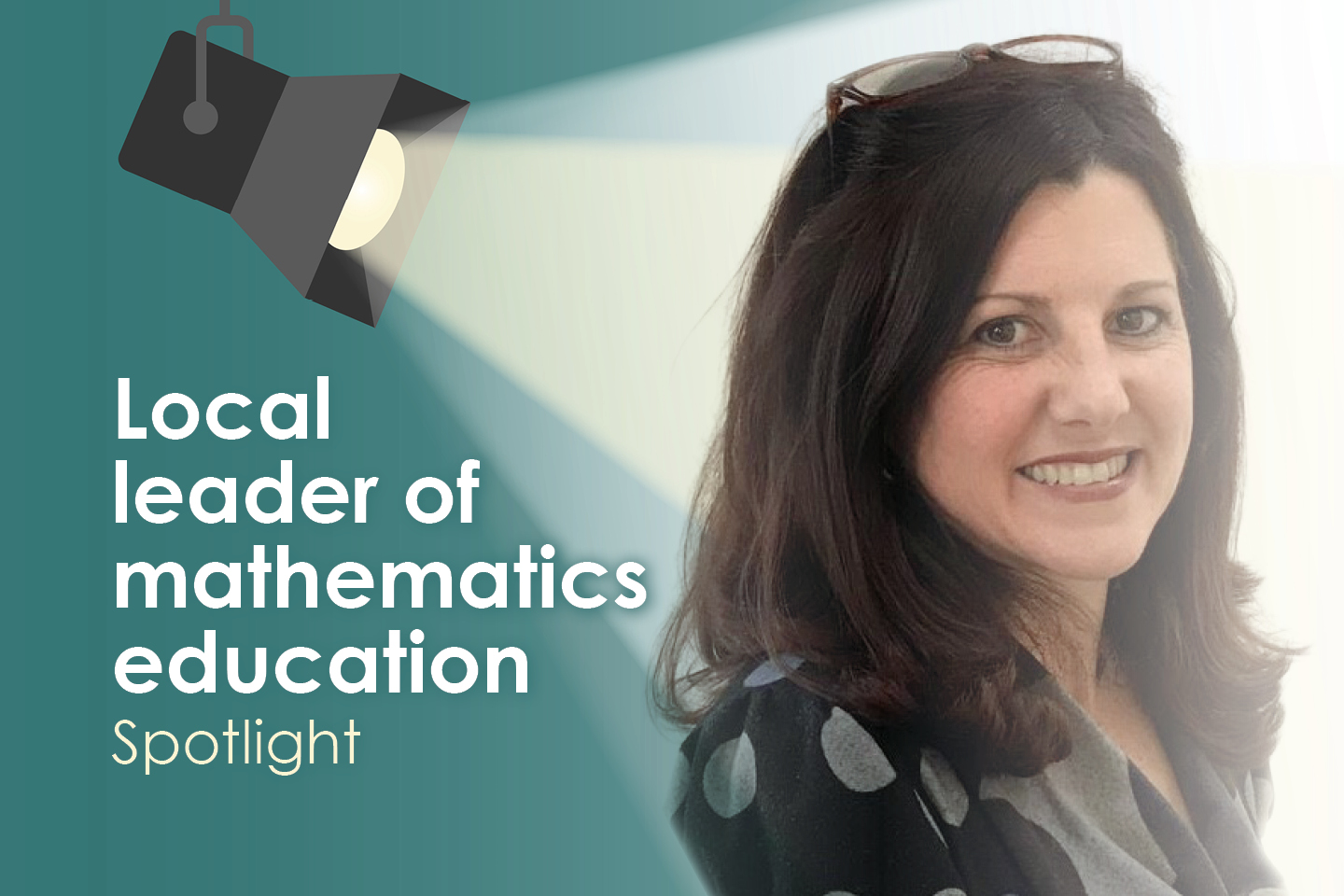
Local leaders of mathematics education (LLMEs) are the experienced teachers who lead Maths Hubs professional development at a local level. They are experts in maths teaching and professional development, bringing together a knowledge of their local context with an understanding of the national picture of maths teaching.
Any great teacher with a passion for developing others has the potential to become an LLME and recruitment for new LLMEs is now open.
In our ‘Spotlights’ series, we speak to LLMEs across the country, in all phases, to learn more.
LLME applications are open for 2026/27 - see our news item for more information; the application window closes on 23 April 2026.
Linda Lavagna-Slater is an experienced LLME whose passion for developing high-quality maths teaching has informed her extensive work across Abacus, Turing and NW3 Maths Hubs. In this Spotlight, she shares her journey with the Early Career Teacher Specialist Knowledge for Teaching Mathematics (SKTM) Programme (available for Early Years, primary and secondary ECTs), what makes it so powerful, and the impact she sees on ECTs year after year.
Tell us a bit about your journey with the Maths Hub
I have been involved with Maths Hubs since 2015, initially as a Research and Innovation Work Group (RIWG) Lead. From there, I became a Mastery Readiness Work Group Lead (now the Teaching for Mastery Introductory Phase), supporting schools at the early stages of their mastery journey. Since then, I have continued to expand my involvement by leading SKTM Work Groups for both teachers and TAs. This progression has allowed me to experience the Maths Hub community from multiple perspectives and deepen my commitment to developing high-quality maths teaching.
I have been involved in this programme since it first launched in 2021/22. Before this, I had already been leading Work Groups for teachers and TAs, so when the opportunity arose to work with Early Career Teachers, I jumped at the chance. Supporting ECTs to deepen their specialist knowledge in teaching mathematics felt like a natural progression, and it’s been incredibly rewarding to help shape their practice at such a formative stage in their careers.
What does your role leading this work involve?
In my role, I attend the national LLME development sessions, run by the NCETM, where we explore the programme resources and discuss how they can be adapted to meet the needs of our local cohort. This year is particularly exciting, as the programme content has been updated to align with the new ECT Expertise in Teaching Maths Modules. I ensure that the pace and content of our sessions is manageable for the teachers and that a strong culture of collaboration is established. I also liaise closely with the Maths Hub Leadership Team to understand schools’ contexts and local priorities, ensuring that these are meaningfully reflected in the programme content.
What makes this programme special?
I am genuinely passionate about this programme because I love seeing early career teachers grow in confidence over the year. They arrive enthusiastic and open to new approaches, and it’s incredibly rewarding to support that journey and watch their practice develop. I leave every session with a renewed sense of energy for the programme because the learning community we build together is so supportive and inspiring. A particularly special aspect of this programme is the direct engagement with maths. Participants explore manipulatives and representations firsthand which has a significant impact on their understanding and classroom practice.
The programme’s structure also sets it apart. Having four full-day workshops across the year allows the ECTs to form a trusting professional relationship. Participants feel safe to share ideas during sessions and continue their collaboration between workshops by uploading resources and activities on Basecamp (our online community platform). The format gives teachers the time and space to embed good practice, trial new strategies, and reflect on the impact through their focus pupils. This cycle of learning, trialling strategies and evaluating is powerful, and seeing it play out in real classrooms is what makes the SKTM so meaningful to me.
What impact does the programme have on participating teachers and how do they change over the course of the Work Group?
In every ECT Work Group that I have been involved with, their confidence and love for teaching mathematics has grown enormously.
I’ve had some fantastic feedback from participants:
The workshops have challenged me to think about the use of mathematical language within my lessons and the importance of not overwhelming children with too many words, instead focusing on key terms to enhance clarity. They also encouraged me to explore different methods and representations when teaching various topics, including the use of equipment, real-life contexts and visual models to highlight a variety of options that support learning across all abilities.
I now explicitly teach the use of mathematical equipment, modelling how and when to use it effectively. I observe children more closely during lessons and use this information to adapt my teaching in real time.
A key part of my practice now includes anticipating common misconceptions and addressing them before they arise. I build this into my modelling and planning by breaking learning into smaller steps, using carefully chosen examples, and making links to prior knowledge. This helps prevent confusion and ensures all children can access the learning securely.
These sessions have supported me in meeting the needs of all abilities within my class. They also prompted reflection on the pace of my teaching and the value of repetitive practice in helping children consolidate and retain their learning.
What would you say to a teacher considering taking part in an SKTM programme?
I would wholeheartedly encourage any teacher to take part in an SKTM programme. It offers a unique opportunity to slow down, step back from the busyness of day-to-day teaching and really focus on developing both subject knowledge and effective pedagogical approaches in maths.
The programme provides dedicated time and space to reflect on practice, engage with current research and explore new strategies that can make a big difference in the classroom. You’ll also benefit from working alongside other local teachers, sharing experiences and building a supportive learning community that grows over the year.
One of the strengths of these programmes is the emphasis on doing the maths for yourself – engaging in a hands-on way that deepens understanding and builds confidence. There are also often opportunities to observe live lessons, which bring the ideas to life and help you connect theory with real classroom practice.
If you’re looking for professional development that is practical, collaborative and genuinely transformative, the SKTM programmes are an excellent choice.
Ready to take the next step in your teaching career?
Find out how local leaders of maths education (LLMEs) lead Maths Hubs work locally – and how you can develop the expertise to become one.
Discover