What PISA 2025 tells us as we plan for the new secondary maths curriculum
Nicola Trubridge, the NCETM’s Director for Secondary Mathematics, reflects on the latest PISA findings and what they might mean as the maths education community prepares for a new maths national curriculum
11/09/2026

In my first blog post as Director for Secondary Mathematics, I described secondary maths as being at a pivotal moment. As we prepare for curriculum change, I suggested that our focus should remain firmly on pupils’ experience of mathematics: this means the overall coherence of the curriculum, not just its content. The most important factor is the quality of classroom teaching, which includes the opportunities pupils have to think and reason, and the expectations we hold for every learner.
The publication of the PISA 2025 results offers another useful source of evidence for this conversation.
Building on a strong English performance
There is much to welcome. The UK’s average mathematics score was 488, compared with an OECD average of 463. The score for England was 492 (PISA 2025: national report for England). The UK was placed among the top-performing education systems across mathematics, science and reading.
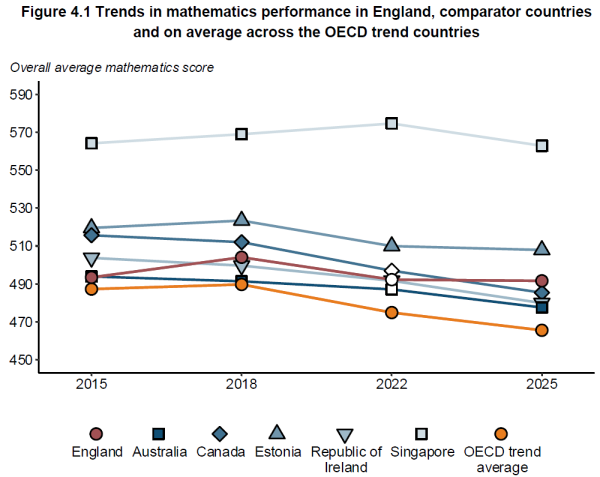
Figure 4.1 (DfE, 2026, p69) click/tap to enlarge
The trend graphs compare England with a consistent set of international benchmark systems chosen because they provide meaningful policy and performance comparisons, including strong English-speaking jurisdictions (Australia and Canada), a close neighbour (Ireland), a high-performing European system (Estonia), and a world-leading performer (Singapore).
England’s mathematics performance was also broadly stable between 2022 and 2025, while the OECD average declined. This is notable given that both cohorts had experienced significant disruption to their education during the Covid-19 pandemic, and reflects the sustained work of teachers, subject leaders and the wider mathematics education community.
PISA is useful not as a league table, but as a prompt to consider how England’s maths education performance is progressing, and where further attention is needed.
Prioritising depth and coherence
One of PISA’s clearest messages is the importance of depth over breadth. The report argues for teaching a focused body of essential content well enough for pupils to achieve genuine mastery, with curriculum, teaching and assessment working together.
This feels particularly relevant as we plan the next curriculum. The starting question should not be ‘What else can we fit in?’ Instead, we should ask:
- Which mathematical ideas do pupils need to understand deeply?
- How should these ideas develop across primary and secondary education?
- How can assessment reveal secure and connected understanding?
- How do we ensure that all pupils engage with a mathematics curriculum appropriate to their needs?
PISA defines mathematical proficiency as the capacity to reason mathematically and to formulate, employ and interpret mathematics in different contexts. Secure fluency is essential, but it must provide a foundation for reasoning, problem solving and making connections.
Keeping opportunity open to every pupil
The findings also reinforce the importance of equity. Although England compares relatively well internationally, substantial gaps remain between different groups of pupils.
Socioeconomic disadvantage remains a significant factor. In England, there was an 89-point difference in mathematics between the most and least socioeconomically advantaged pupils. This is an important reminder that strong average national performance can mask substantial differences in pupils’ outcomes, and reinforces the need to ensure that every pupil has access to an ambitious and coherent mathematics curriculum.
Gender is another area where the findings warrant attention.
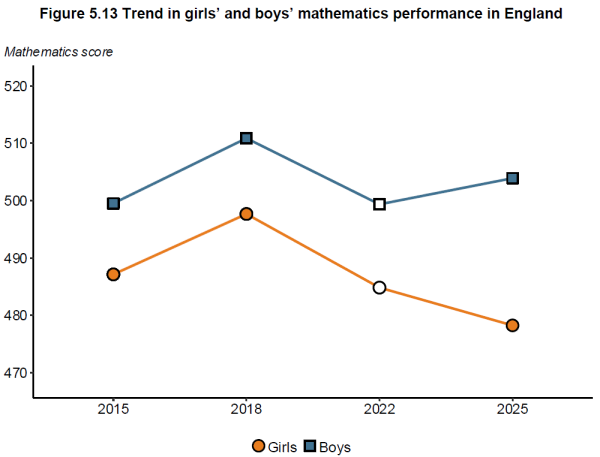
Figure 5.13 (DfE, 2026, p111) click/tap to enlarge
Boys achieved an average score of 504 compared with 478 (England) for girls. As previously discussed in an NCETM Director’s blog post, Rebalancing the equation: the maths gender gap and why it matters, this should not lead to simplistic assumptions about capability. Instead, it should prompt schools to examine their own evidence carefully. When does a gap appear? Is it linked to particular areas of mathematics, confidence, persistence, participation or responses to unfamiliar problems? Are there classroom practices that could help to address the gap?
Our response must retain high expectations and ensure that grouping, intervention and curriculum pathways keep future mathematical choices open.
Protecting mathematical thinking
PISA also highlights declining reading performance internationally, hasty responses and the effects of digital distraction. These issues matter in mathematics, where success often depends on attending carefully to language, interpreting conditions and sustaining a chain of reasoning.
The findings on artificial intelligence are similarly nuanced. Technology can enhance exploration and feedback, but it can also remove the cognition through which learning develops.
In mathematics, AI might support learning when pupils critique a generated solution, identify an error or compare methods. It is less likely to be useful when it provides a complete solution before the pupil has attempted the problem. Technology should add to pupils’ mathematical thinking, not replace it.
Looking ahead
PISA does not provide a blueprint for the new curriculum, but it does offer valuable evidence as we consider what comes next.
Its findings strengthen the case for depth, coherence, equity and sustained mathematical thinking. They also remind us that curriculum reform must ultimately be judged by the mathematical experience it creates for every young person.
This work will require the collective expertise of schools, Maths Hubs and the wider mathematics education community. It is a significant opportunity, and one I look forward to maths educators working on together, so we can help enable all pupils to access an excellent maths education.
OECD (2026), PISA 2025 Results (Volume I): Future-Ready Students, PISA, OECD Publishing, Paris.
DfE (2026), PISA 2025: national report for England, Research report